
Reliable Power Transfer for Critical Operations
In any facility where uptime matters, maintaining continuous power is non-negotiable. **Transfer switches** provide a dependable means of transferring essential loads between a primary and an alternate power source—keeping systems running even during outages or maintenance events.
From data centers and hospitals to industrial plants and commercial complexes, transfer switches safeguard operations by ensuring that critical circuits always have power available from at least one source.
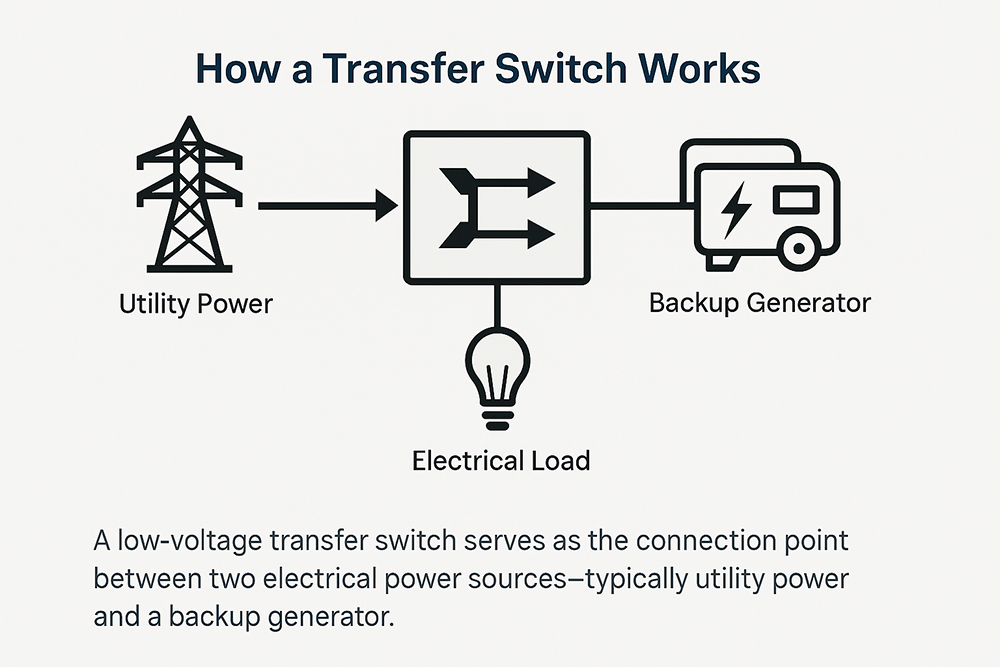
How a Transfer Switch Works
A low-voltage transfer switch serves as the connection point between two electrical power sources—typically utility power and a backup generator. When the primary source becomes unavailable, the transfer switch safely shifts the electrical load to the secondary source, preventing downtime and protecting sensitive equipment.
Transfer switches are available in two main types, each suited to specific operational needs and facility requirements.
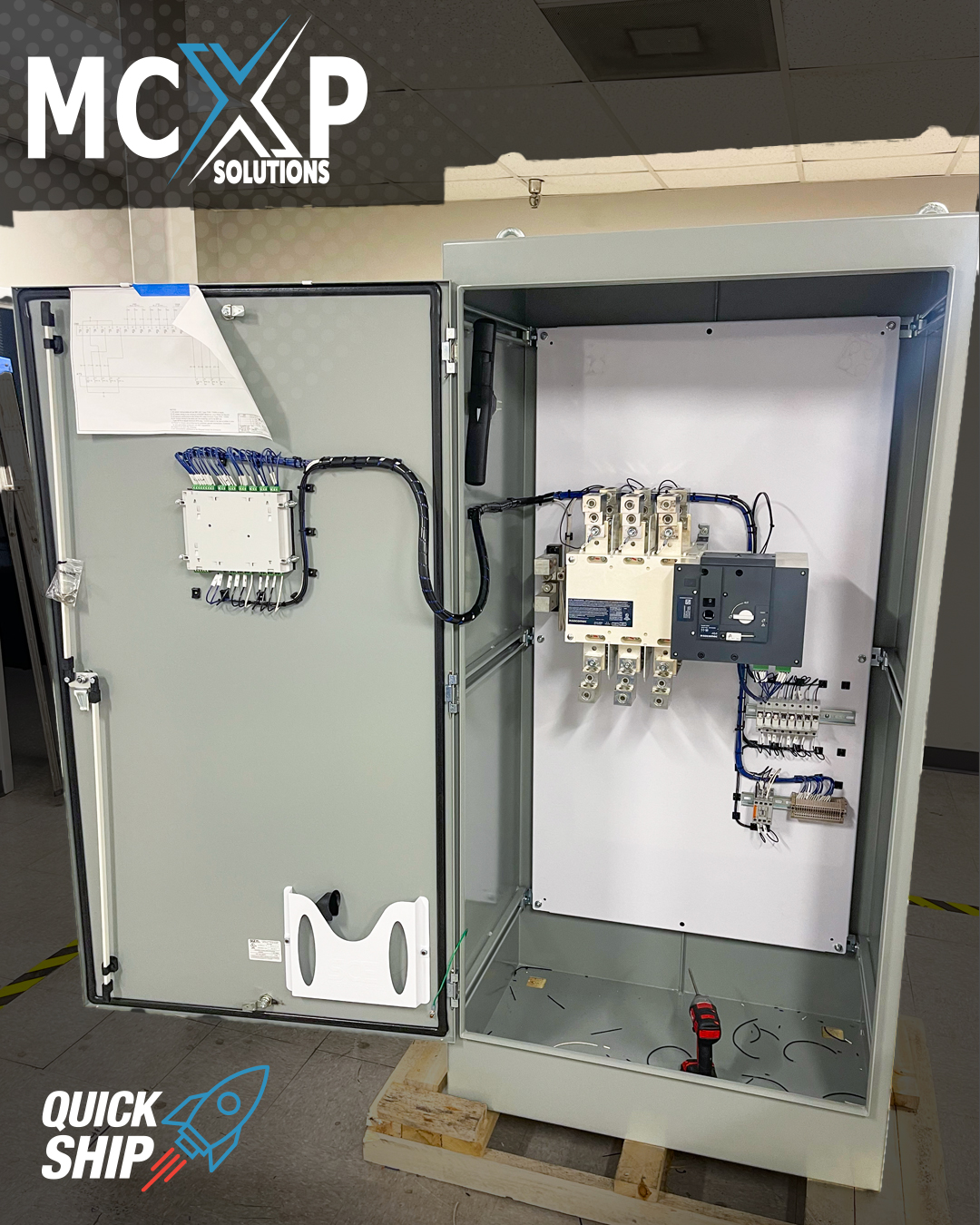
Automatic Transfer Switches
An Automatic Transfer Switch (ATS) is an intelligent, self-acting power control device. It continuously monitors voltage and frequency from both the primary and alternate power sources. When it detects a loss of power or unacceptable voltage, it automatically transfers the load to the secondary source—usually a generator—within seconds.
Once the utility source is stable again, the ATS seamlessly switches the load back to the primary supply.
Key advantages of ATS units include:
MCXP Solutions designs and builds ATS systems that integrate safely into your existing infrastructure, meeting UL, NEC, and local code standards for performance and reliability.
Engineered for Safety and Compliance
MCXP Solutions builds and configures both automatic and manual transfer switches to meet your specific electrical and operational requirements. Each unit is engineered with the highest emphasis on safety, quality, and code compliance.
We offer:
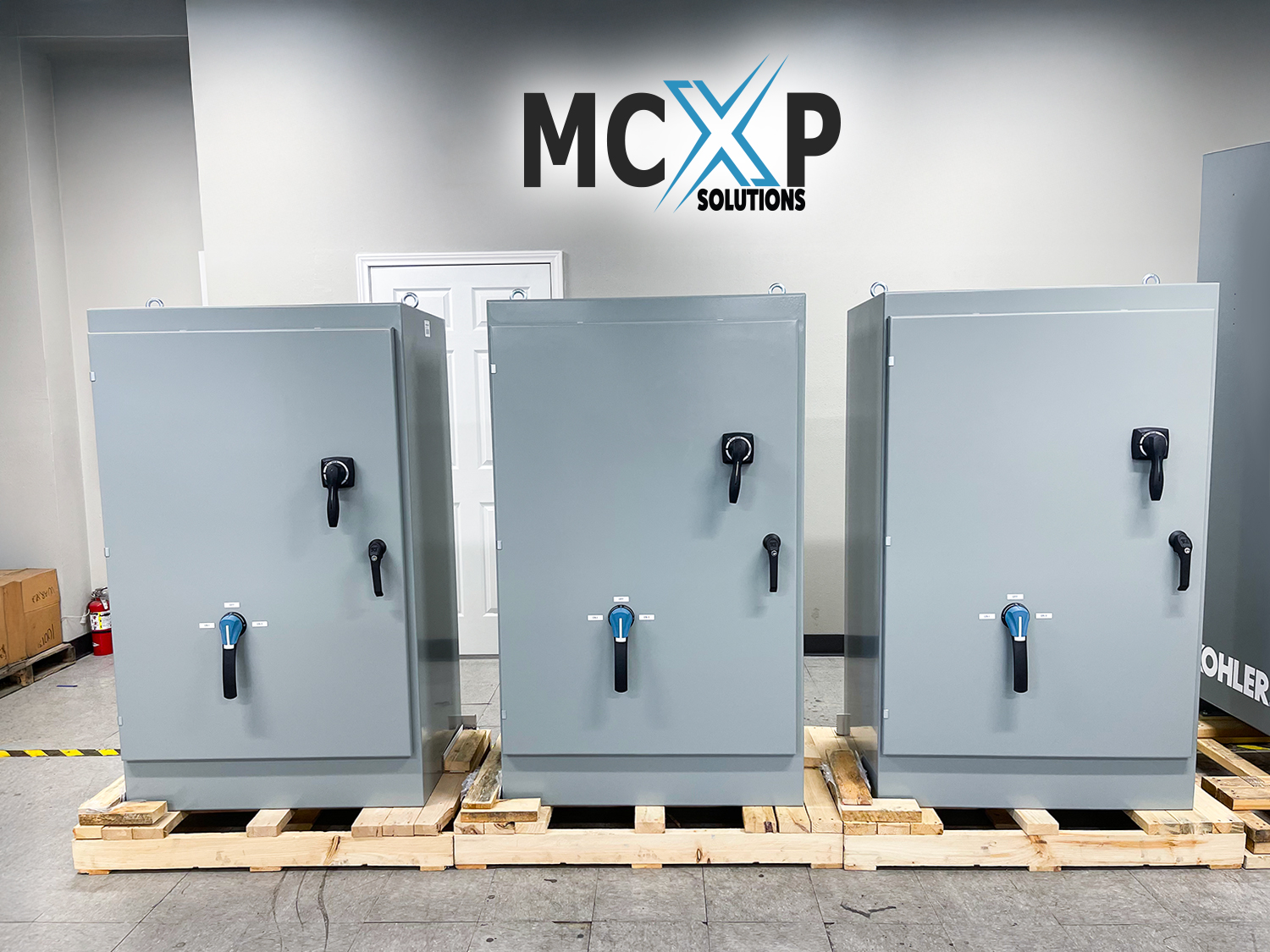
All assemblies are tested for mechanical integrity, continuity, and transfer reliability before shipment—ensuring every system performs exactly as designed.